
Tornado Cash

Tornado Cash: The Controversial Privacy Protocol

Tornado Cash was Ethereum’s most popular mixing service until U.S. sanctions shut it down. It used zero-knowledge proofs to enable private transactions on a transparent blockchain.

Tornado Cash was a decentralized mixing protocol on Ethereum that used zero-knowledge proofs to enable private transactions by breaking the link between sender and receiver addresses. Users could deposit ETH or tokens and later withdraw equivalent amounts from different addresses.

How Tornado Cash Worked

Smart contract pools held deposits of fixed amounts (0.1, 1, 10, or 100 ETH) where users could deposit funds and receive cryptographic commitments proving their deposit without revealing identity.

Zero-knowledge proofs allowed users to prove they had made a valid deposit without revealing which specific deposit was theirs, enabling private withdrawals to fresh addresses.

Anonymity sets grew larger with more users, improving privacy as it became harder to correlate deposits and withdrawals through timing or amount analysis.
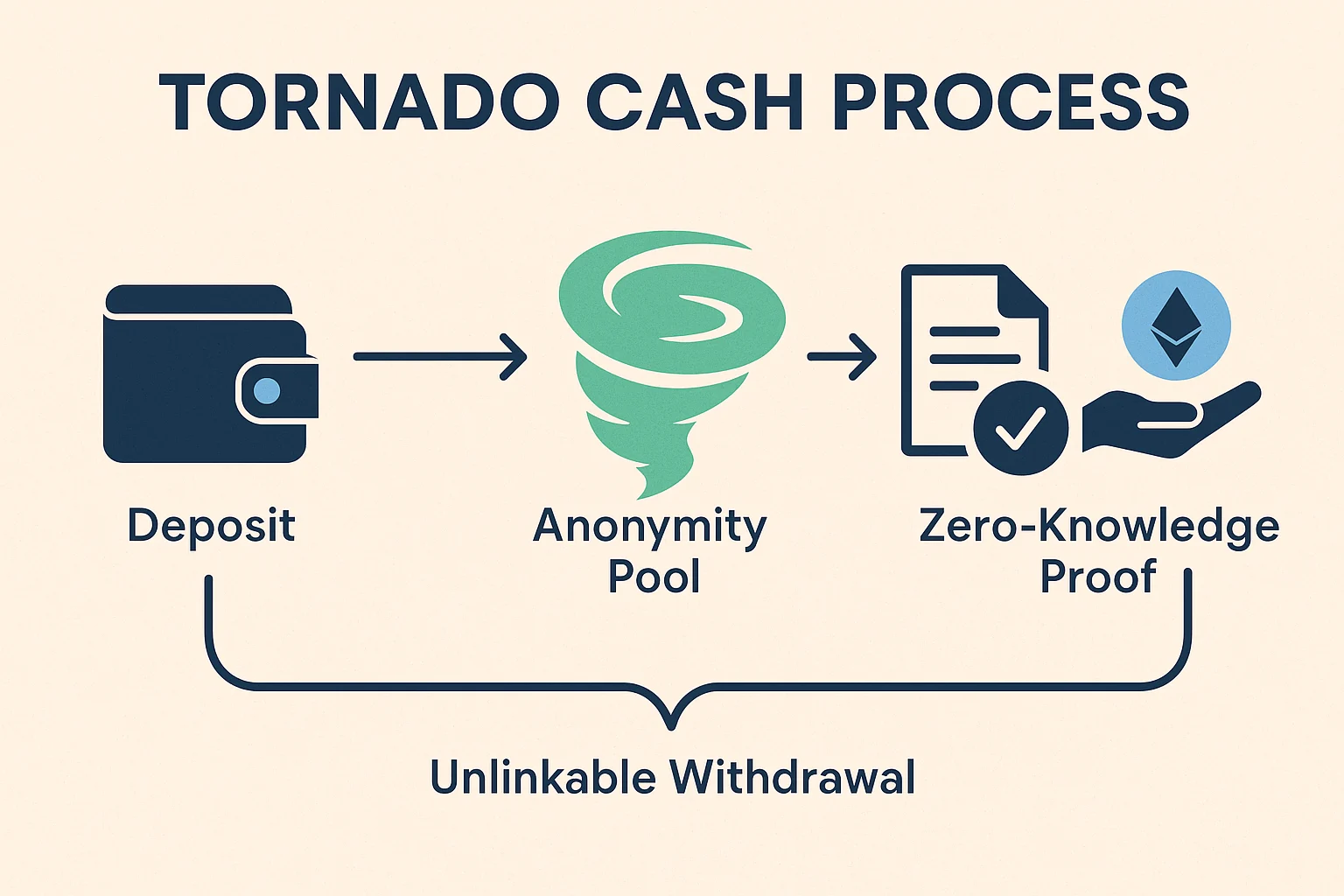
Infographic showing Tornado Cash process: deposit, anonymity pool, zero-knowledge proof, and unlinkable withdrawal

Real-World Examples

  • Privacy-conscious users mixed legitimate funds to prevent transaction surveillance and protect financial privacy
  • Criminal activity also used the service, leading to regulatory scrutiny and eventual sanctions
  • North Korean hackers reportedly used Tornado Cash to launder stolen cryptocurrency

Why Beginners Should Care

Regulatory precedent from Tornado Cash sanctions affects the entire crypto privacy space, potentially criminalizing privacy-enhancing technologies regardless of legitimate use cases.

Code vs. usage debates center on whether privacy tools themselves should be banned or only their illegal applications should be prosecuted.

Chilling effects on privacy development may result as developers avoid creating tools that could face similar regulatory action, reducing financial privacy options for law-abiding users.

Related Terms: Mixing Service, Zero-Knowledge Proof, Privacy Coin, Sanctions

Back to Crypto Glossary

Similar Posts

  • Gas Fees

    Gas Fees: The Cost of Using Ethereum Gas fees are the tolls you pay to use Ethereum. Sometimes they’re pennies, sometimes they’re hundreds of dollars. Welcome to decentralized computing. Gas fees are transaction costs paid to miners or validators for processing transactions on blockchain networks. Think of gas as the fuel needed to power your…

  • NFT Lending

    NFT Lending: Borrowing Against Digital Art NFT lending allows using non-fungible tokens as collateral for cryptocurrency loans. It’s like pawning your rare baseball cards, except the cards live in digital wallets. NFT lending enables borrowers to use their non-fungible tokens as collateral to obtain cryptocurrency loans while retaining the potential upside of their digital assets….

  • Buyback

    Buyback: Token Repurchase ProgramsBuyback refers to projects repurchasing their own tokens from the open market, often to reduce supply or return value to token holders. It's like a company buying back its own stock to increase the value of remaining shares.Buyback describes the process where cryptocurrency projects repurchase their own tokens from the open market…

  • Fee Sharing

    Fee Sharing: Distributing Protocol RevenueFee sharing distributes a portion of protocol revenues to token holders, stakers, or other participants. It's like getting dividends from a company you own shares in.Fee sharing refers to mechanisms that distribute portions of protocol fees, transaction costs, or other revenues to token holders or network participants. This creates direct financial incentives…

  • Challenge Period

    Challenge Period: Dispute Resolution WindowA challenge period is a time window during which participants can dispute or challenge proposed changes before they become final. It's like a cooling-off period for important decisions.A challenge period is a predetermined time frame that allows network participants to dispute transactions, withdrawals, or governance proposals before they become irreversible. This mechanism…

  • Liquidity Sniping

    Liquidity Sniping: Front-Running New Pools Liquidity sniping involves immediately buying tokens when new liquidity pools are created, often using bots to front-run regular users. It’s like cutting in line at the grand opening sale. Liquidity sniping is the practice of using automated systems to immediately purchase tokens as soon as new liquidity pools go live,…