
ZK-EVM

ZK-EVM: Zero-Knowledge Ethereum Compatibility

ZK-EVM provides Ethereum compatibility while using zero-knowledge proofs for scalability and privacy. It’s like having Ethereum that’s faster, cheaper, and more private.

ZK-EVM is a zero-knowledge rollup that maintains full compatibility with Ethereum’s execution environment while using ZK proofs for validation. This enables existing Ethereum applications to run without modification while benefiting from ZK scalability.

How ZK-EVM Works

EVM compatibility ensures existing smart contracts, tools, and applications work without changes, providing seamless migration from Ethereum.

Zero-knowledge proofs validate transaction execution without revealing details, enabling both scalability and privacy simultaneously.

Bytecode execution processes Ethereum transactions and smart contracts identically to mainnet while generating cryptographic proofs of correctness.
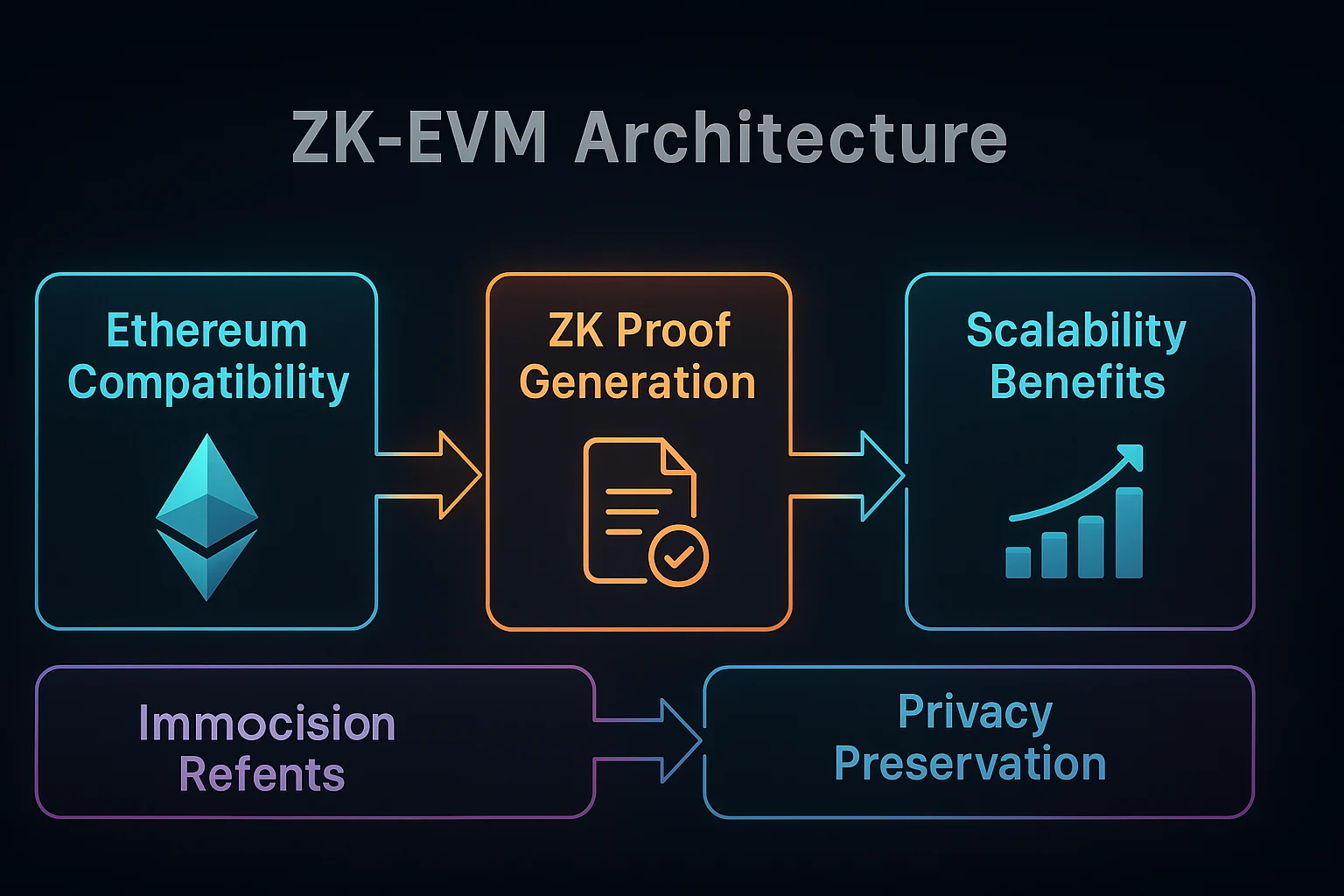
ZK-EVM architecture showing Ethereum compatibility, ZK proof generation, scalability benefits, and privacy preservation

Real-World Examples

  • Polygon zkEVM provides full Ethereum compatibility with ZK proof validation
  • Scroll implements native zkEVM with focus on maintaining exact Ethereum behavior
  • Linea (ConsenSys) offers enterprise-focused zkEVM infrastructure

Why Beginners Should Care

Best of both worlds combining Ethereum’s mature ecosystem with ZK rollup benefits of speed, cost, and privacy.

Developer experience remains identical to Ethereum, enabling easy migration of existing applications and tools.

Technical complexity in ZK proof generation creates different trade-offs compared to optimistic rollups in terms of finality and computational requirements.

Related Terms: Zero-Knowledge Proof, EVM, Layer 2, Smart Contract Compatibility

Back to Crypto Glossary

Similar Posts

  • Collection

    Collection: Grouped NFT SeriesA collection is a group of related NFTs that share common themes, artwork, or attributes. It's like a series of trading cards or stamps that belong to the same set.A collection refers to a group of related NFTs that share common characteristics, themes, or attributes, typically created by the same artist or…

  • Decentralized Identity (DID)

    Decentralized Identity (DID): Self-Sovereign Digital Identity DIDs give users control over their digital identity without relying on centralized authorities like governments or tech companies. It’s like having a passport that you issue and control yourself. Decentralized Identity (DID) is a digital identity framework that gives individuals control over their personal data and identity verification without…

  • Wrapped Token

    Wrapped Token: Bringing Assets Cross-Chain Wrapped tokens let you use Bitcoin on Ethereum, Ethereum on Solana, and any asset on any blockchain. They’re the universal adapters of crypto. A wrapped token is a cryptocurrency that represents another asset on a different blockchain, maintaining a 1:1 peg through collateralization. The original asset gets locked in a…

  • Parabolic

    Parabolic: Exponential Price MovementParabolic describes extremely rapid price increases that follow exponential growth curves, often unsustainable in the long term. It's like a rocket shooting straight up into the sky – impressive to watch but likely to come back down eventually.Parabolic refers to price movements that follow exponential growth patterns, characterized by accelerating increases that…

  • Blockchain Oracle Network

    Blockchain Oracle Network: Decentralized Data Feeds Blockchain oracle networks provide external data to smart contracts through decentralized systems rather than single data sources. It’s like having multiple weather stations instead of relying on one thermometer. A blockchain oracle network is a decentralized system of nodes that collectively provide external data to blockchain networks, reducing single…

  • DeFi Primitives

    DeFi Primitives: Basic Building BlocksDeFi primitives are fundamental financial functions like lending, borrowing, and trading that serve as building blocks for more complex decentralized finance applications. They're like Lego blocks for financial services.DeFi primitives refer to basic financial functions implemented as smart contracts that can be combined to create more complex financial products and services. These…