
Multisig Recovery

Multisig Recovery: Getting Back Lost Access

Multisig recovery helps regain access to multi-signature wallets when some keys are lost or compromised. It’s like having spare keys for your house, but with cryptographic mathematics.

Multisig recovery refers to mechanisms that restore access to multi-signature wallets when the required number of signatures is no longer available due to lost keys, compromised devices, or unavailable signers. Recovery methods must balance security with accessibility.

How Multisig Recovery Works

Threshold adjustment may allow reducing signature requirements during recovery procedures, typically requiring unanimous consent from remaining key holders.

Timelock recovery enables predetermined recovery procedures that activate after extended periods of inactivity, allowing backup methods to restore access.

Social recovery involves trusted contacts who can collectively restore access through predetermined procedures when primary key holders are unavailable.
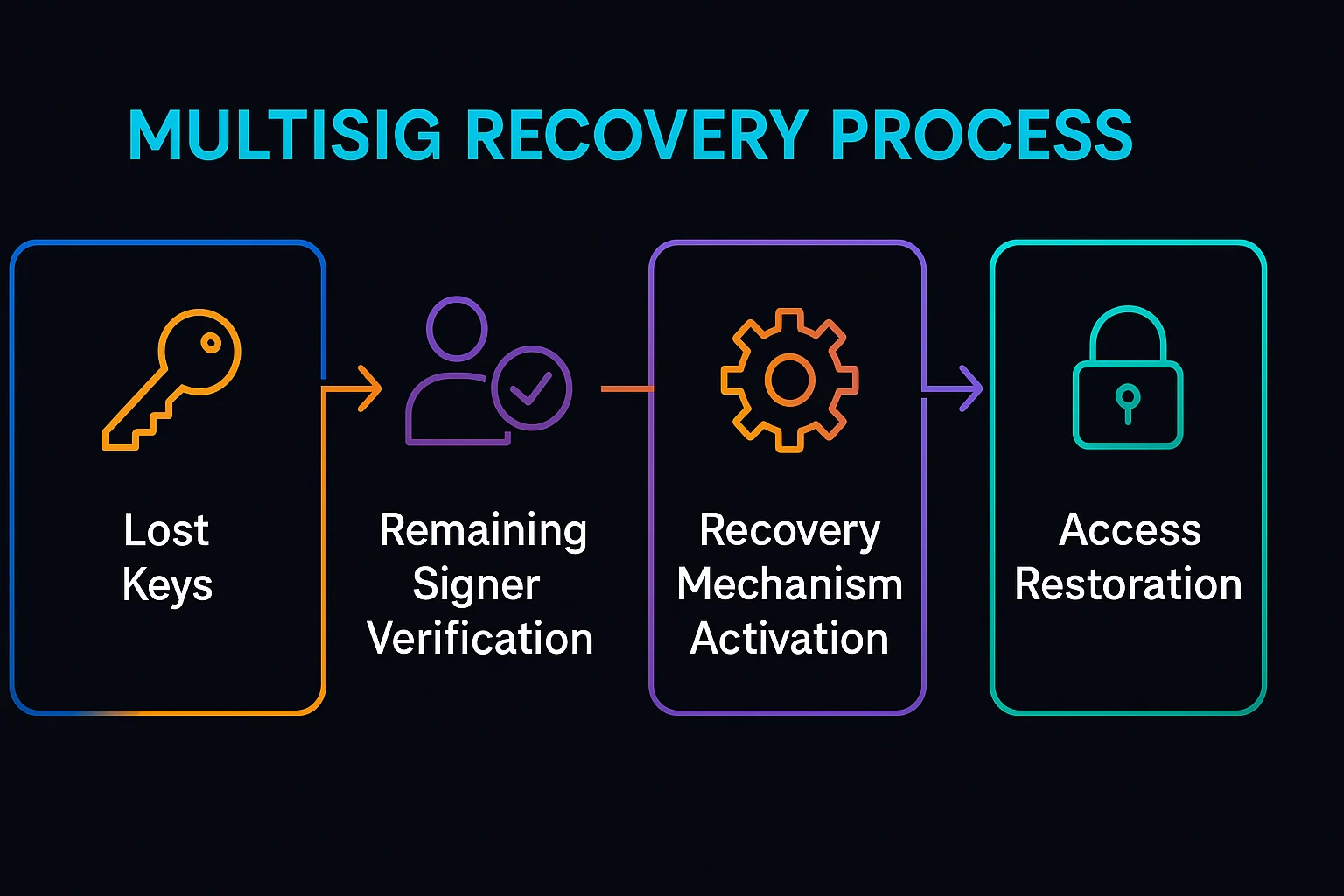
Multisig recovery process showing lost keys, remaining signer verification, recovery mechanism activation, and access restoration

Real-World Examples

  • Gnosis Safe recovery modules enable timelock-based recovery procedures for multi-signature wallets
  • Argent wallets use social recovery with trusted guardians to restore access
  • Corporate treasury recovery procedures for when key employees leave or become unavailable

Why Beginners Should Care

Access preservation prevents permanent loss of funds when multisig signers become unavailable due to device loss, death, or other circumstances.

Security trade-offs as recovery mechanisms can potentially be exploited if not designed carefully, creating new attack vectors.

Planning importance requires establishing recovery procedures before they’re needed, when all parties are available to configure them properly.

Related Terms: Multi-Signature, Social Recovery, Timelock, Wallet Security

Back to Crypto Glossary

Similar Posts

  • Privacy Coin

    Privacy Coin: Digital Cash That Actually Hides Privacy coins use advanced cryptography to hide transaction details like amounts, senders, and receivers. They’re what Bitcoin was supposed to be before everyone realized blockchain transactions are completely transparent. Privacy coins are cryptocurrencies designed to provide anonymous or untraceable transactions through advanced cryptographic techniques. Unlike Bitcoin where all…

  • Payment Channel

    Payment Channel: Off-Chain Transaction RoutingPayment channels enable fast, cheap cryptocurrency transactions between parties without recording every transaction on the blockchain. They're like running a tab at a restaurant instead of paying for each item separately.A payment channel is an off-chain mechanism that allows two parties to conduct multiple cryptocurrency transactions without broadcasting each one to…

  • Token Emissions

    Token Emissions: New Cryptocurrency CreationToken emissions refer to the creation and distribution of new cryptocurrency tokens over time according to predetermined schedules. It's like a factory that produces new money at controlled rates rather than printing it all at once.Token emissions describe the systematic creation and release of new cryptocurrency tokens into circulation according to…

  • Network Upgrade

    Network Upgrade: Blockchain System ImprovementsNetwork upgrades implement improvements, fixes, or new features to blockchain protocols through coordinated changes across all network participants. It's like upgrading an entire city's infrastructure where everyone needs to follow the new traffic rules at the same time.Network upgrade refers to coordinated changes to blockchain protocol rules that enhance functionality, security,…

  • Deflationary

    Deflationary: Decreasing Token Supply Over TimeDeflationary cryptocurrencies have mechanisms that reduce total token supply over time, potentially increasing value through artificial scarcity. It's like having money that becomes rarer automatically.Deflationary refers to cryptocurrency tokenomics designed to decrease total token supply over time through burning, buybacks, or other reduction mechanisms. This creates scarcity pressure that can support…

  • Regulatory Risk

    Regulatory Risk: Government Policy UncertaintyRegulatory risk refers to potential losses from government policy changes affecting cryptocurrency legality, taxation, or usage restrictions. It's like the risk that traffic laws might change and make your car illegal to drive.Regulatory risk encompasses potential negative impacts from government actions including bans, restrictions, taxation changes, or new compliance requirements affecting…