
Cold Wallet

Cold Wallet Backup: Securing Your Security

Cold wallet backup ensures you can recover your cryptocurrency even if your hardware wallet is lost, stolen, or destroyed. It’s like having spare keys to your safe deposit box.

Cold wallet backup refers to secure storage methods for seed phrases and recovery information that enable restoring access to hardware wallets and cold storage systems. Proper backup prevents permanent loss of funds due to device failure or loss.

How Cold Wallet Backup Works

Seed phrase storage involves securely recording the 12-24 word recovery phrase that can regenerate all wallet addresses and private keys.

Multiple backup methods include paper storage, metal engraving, and distributed storage across secure locations to prevent single points of failure.

Verification testing ensures backup information actually works by testing recovery procedures with small amounts before trusting large holdings.
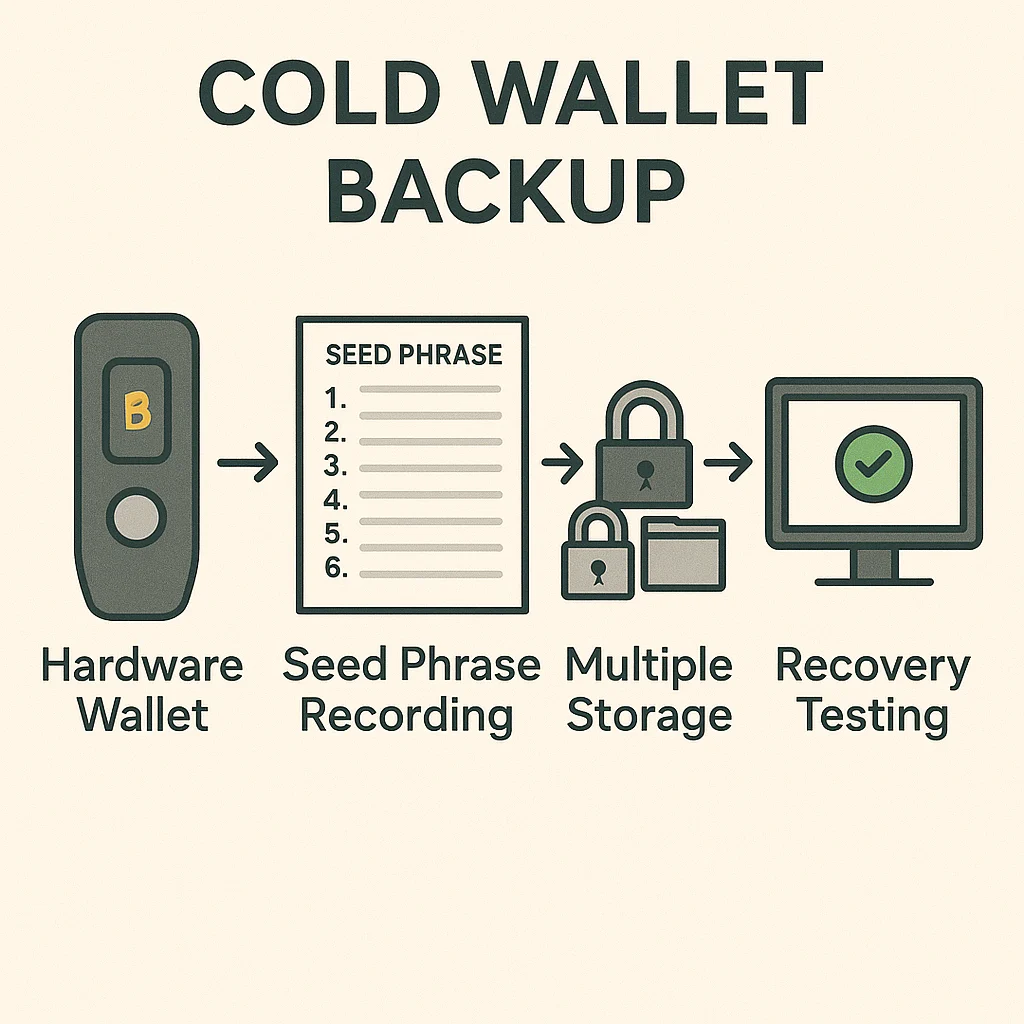
Infographic showing hardware wallet backup steps: device setup, seed phrase recording, multiple storage, and recovery testing

Real-World Examples

  • Metal seed storage using steel plates that resist fire, flood, and corrosion damage
  • Bank safety deposit boxes for storing written seed phrases in secure, controlled environments
  • Distributed storage splitting seed phrases across multiple secure locations

Why Beginners Should Care

Permanent loss prevention since cryptocurrency recovery is impossible without proper backup procedures, unlike traditional banking systems.

Inheritance planning enables family members to access cryptocurrency holdings in case of death or incapacitation through proper backup sharing.

Security balance between accessibility for legitimate recovery and protection from theft or unauthorized access to backup materials.

Related Terms: Hardware Wallet, Seed Phrase, Cold Storage, Recovery

Back to Crypto Glossary

Similar Posts

  • Liquidity Sniping

    Liquidity Sniping: Front-Running New Pools Liquidity sniping involves immediately buying tokens when new liquidity pools are created, often using bots to front-run regular users. It’s like cutting in line at the grand opening sale. Liquidity sniping is the practice of using automated systems to immediately purchase tokens as soon as new liquidity pools go live,…

  • MetaMask

    MetaMask: Your Gateway to Web3 MetaMask is the browser extension wallet that connects you to the decentralized web. It’s like having a crypto wallet built into your browser that talks to every DeFi protocol. MetaMask is a browser extension and mobile wallet that enables interaction with Ethereum-based applications directly through web browsers. It manages private…

  • Fractional Ownership

    Fractional Ownership: Shared Asset OwnershipFractional ownership enables multiple people to own portions of expensive assets that would be difficult to purchase individually. It's like buying a slice of expensive real estate instead of the whole property.Fractional ownership refers to dividing ownership of assets into smaller portions that can be owned by multiple parties, typically enabled…

  • Cold Storage

    Cold Storage: Maximum Security for Crypto Assets Cold storage keeps cryptocurrency private keys completely offline, away from any internet connection. It’s the digital equivalent of storing gold bars in a bank vault rather than your wallet. Cold storage refers to keeping cryptocurrency private keys on devices or media that have never been connected to the…

  • Crypto Vesting Schedule

    Crypto Vesting Schedule: Gradual Token Release Vesting schedules control when team members, investors, or community members can access their allocated tokens. It’s like having a time-locked savings account that prevents dumping. A crypto vesting schedule defines when and how allocated tokens become available for use, typically spreading releases over months or years to prevent market…

  • Protocol Security

    Protocol Security: Protecting Blockchain InfrastructureProtocol security involves designing and maintaining blockchain networks to resist attacks, prevent exploits, and ensure reliable operation. It's like building a fortress with multiple defensive layers.Protocol security encompasses all measures taken to protect blockchain networks from technical attacks, economic manipulation, and operational failures. This includes consensus security, smart contract auditing, and network…