
Cold Storage

Cold Storage: Maximum Security for Crypto Assets

Cold storage keeps cryptocurrency private keys completely offline, away from any internet connection. It’s the digital equivalent of storing gold bars in a bank vault rather than your wallet.

Cold storage refers to keeping cryptocurrency private keys on devices or media that have never been connected to the internet. This creates an “air gap” that makes remote hacking impossible since attackers cannot access offline storage remotely.

How Cold Storage Works

Offline key generation creates private keys on devices that have never touched the internet, ensuring the keys cannot be intercepted during creation.

Physical security becomes paramount since attackers would need physical access to steal funds, shifting security from cybersecurity to traditional physical protection.

Transaction signing happens offline, with signed transactions transferred to online devices for broadcast without exposing private keys to internet-connected systems.
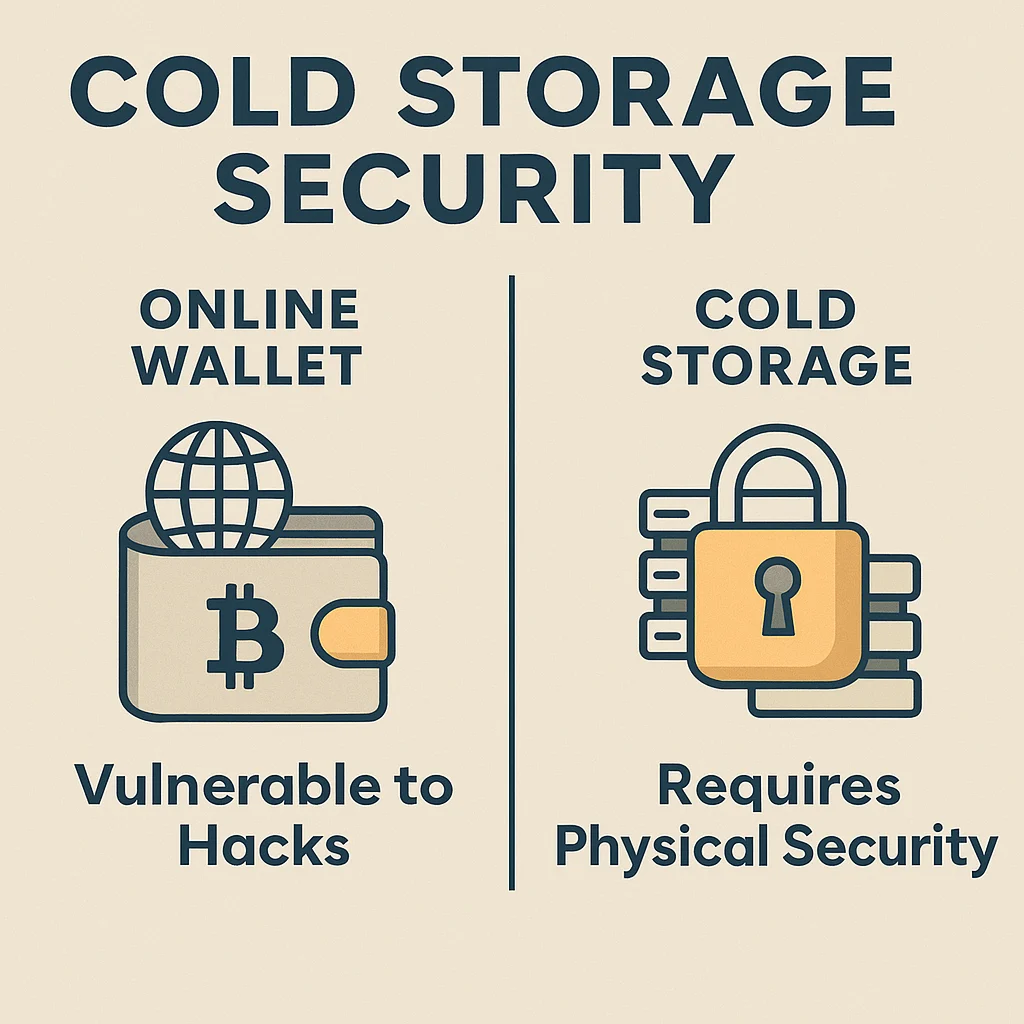
Infographic comparing online wallet vulnerability to hacks with cold storage requiring physical security for crypto assets

Real-World Examples

  • Hardware wallets like Ledger and Trezor provide convenient cold storage for most users
  • Paper wallets store private keys as printed QR codes or written text
  • Steel backups engrave seed phrases on metal plates for fire and flood resistance

Why Beginners Should Care

Exchange hacks happen regularly, making cold storage essential for significant cryptocurrency holdings that you can’t afford to lose completely.

Insurance limitations mean most cold storage losses from user error or theft are not recoverable, making proper setup and backup procedures critical.

Convenience trade-offs exist since cold storage requires more steps for transactions compared to hot wallets, but security benefits usually justify the inconvenience.

Related Terms: Hardware Wallet, Hot Wallet, Private Key, Seed Phrase

Back to Crypto Glossary

Similar Posts

  • Wrapped Token

    Wrapped Token: Bringing Assets Cross-Chain Wrapped tokens let you use Bitcoin on Ethereum, Ethereum on Solana, and any asset on any blockchain. They’re the universal adapters of crypto. A wrapped token is a cryptocurrency that represents another asset on a different blockchain, maintaining a 1:1 peg through collateralization. The original asset gets locked in a…

  • Hot Wallet

    Hot Wallet: Convenience Over Security Hot wallets are your everyday crypto spending accounts. They’re connected to the internet for easy access, but that convenience comes with security trade-offs. A hot wallet is a cryptocurrency wallet that maintains an active internet connection, allowing for quick and easy transactions. Think of it as your crypto checking account…

  • Airdrop

    Airdrop: Free Tokens From the Sky Airdrops distribute free tokens to wallet addresses, usually to reward early users or generate buzz for new projects. Some are worth pennies, others change lives. An airdrop is the distribution of free cryptocurrency tokens to wallet addresses, typically as a marketing strategy, reward for early adoption, or method of…

  • MEV (Maximal Extractable Value)

    MEV (Maximal Extractable Value): The Hidden Tax on DeFi MEV is the extra profit that miners and validators can extract by reordering, including, or excluding transactions within blocks. It’s like cutting in line at the blockchain cafeteria. Maximal Extractable Value (MEV) is the additional profit that block producers can capture by strategically ordering transactions, beyond…

  • Consensus Layer

    Consensus Layer: Network Agreement FoundationThe consensus layer handles how blockchain networks achieve agreement on valid transactions and network state. It's the democratic voting system that keeps everyone on the same page.The consensus layer is the component of blockchain architecture responsible for coordinating agreement among network participants about transaction validity and blockchain state. This layer ensures all…

  • Network Governance

    Network Governance: Blockchain Decision MakingNetwork governance encompasses the processes and mechanisms for making decisions about blockchain protocol changes and upgrades. It's like the constitutional system that determines how a digital nation changes its laws.Network governance refers to the systems and processes through which blockchain networks make decisions about protocol upgrades, parameter changes, and strategic direction. This…