
Decentralized Identity (DID)

Decentralized Identity (DID): Self-Sovereign Digital Identity

DIDs give users control over their digital identity without relying on centralized authorities like governments or tech companies. It’s like having a passport that you issue and control yourself.

Decentralized Identity (DID) is a digital identity framework that gives individuals control over their personal data and identity verification without central authorities. Users can prove who they are and what credentials they hold without depending on third-party identity providers.

How DIDs Work

Self-sovereign control means users generate and manage their own identity credentials rather than relying on institutions to vouch for their identity.

Cryptographic verification enables proving identity ownership through digital signatures without revealing underlying personal information.

Interoperability standards allow DID credentials to work across different platforms and services that support the decentralized identity framework.
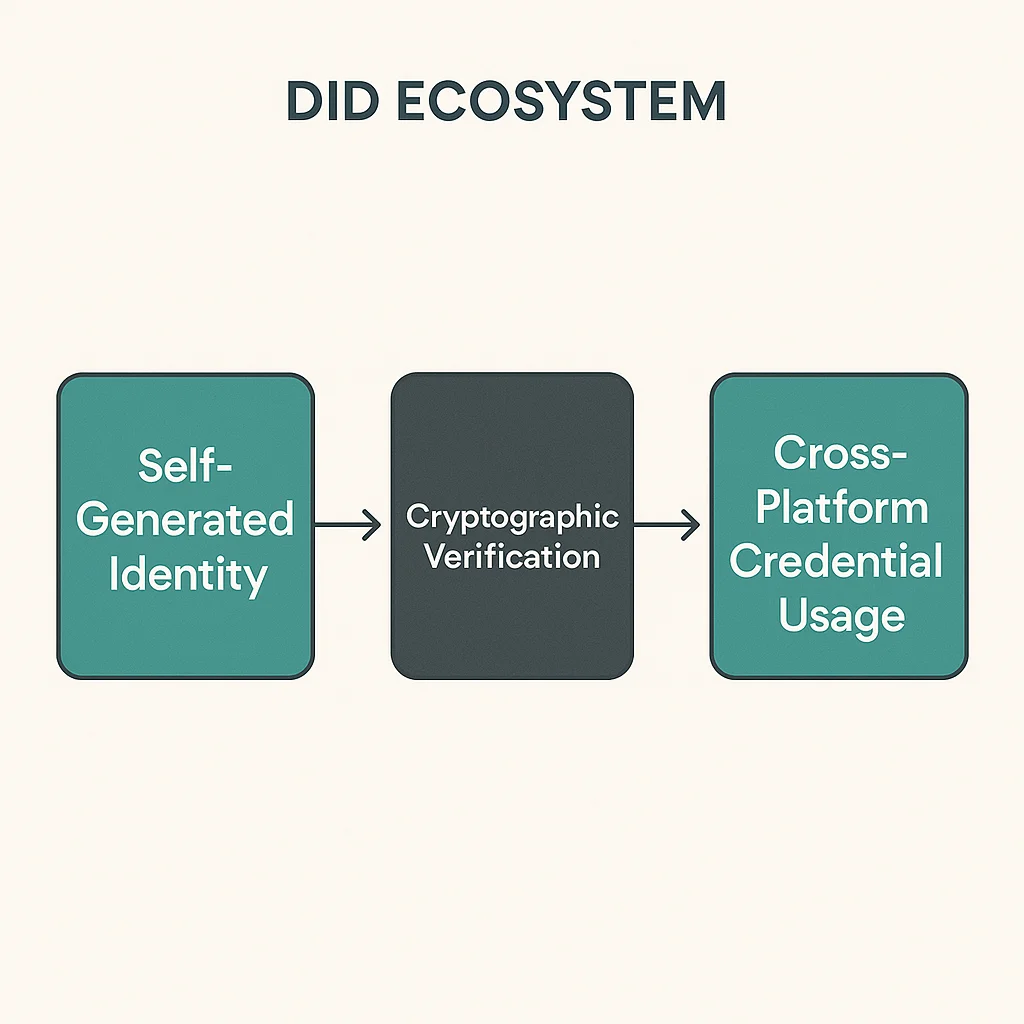
DID ecosystem diagram showing self-generated identity, cryptographic verification, and cross-platform credential usage in a decentralized framework.

Real-World Examples

  • ENS domains provide basic decentralized identity through blockchain-based naming
  • Ceramic Network enables composable identity and reputation across Web3 applications
  • Microsoft ION builds enterprise DID solutions on Bitcoin’s blockchain

Why Beginners Should Care

Privacy control over personal data sharing, allowing selective disclosure of only necessary information for specific use cases.

Reduced platform dependence eliminates risks of losing digital identity when centralized platforms ban accounts or shut down.

Credential portability enables taking verified achievements, reputation, and identity across different platforms and services.

Related Terms: Self-Sovereign Identity, ENS, Verifiable Credentials, Web3

Back to Crypto Glossary

Similar Posts

  • Flashbots

    Flashbots: MEV Infrastructure Flashbots is a research and development organization that builds infrastructure to mitigate the negative externalities of MEV. They’re trying to make the blockchain economy more fair and transparent. Flashbots develops tools and infrastructure to democratize MEV extraction and reduce its harmful effects on regular users. Their products include private mempools, MEV-protected transaction…

  • Layer 1

    Layer 1: The Foundation Blockchain Layer 1 refers to the base blockchain protocol that processes transactions and maintains consensus. It’s the foundation that everything else builds on top of. Layer 1 (L1) is the main blockchain network that handles transaction processing, consensus, and security independently without relying on other blockchains. These are the foundational networks…

  • FUD (Fear, Uncertainty, Doubt)

    FUD: Fear, Uncertainty, and Doubt FUD is FOMO’s evil twin. While FOMO makes you buy at peaks, FUD makes you sell at bottoms. Understanding FUD helps you think clearly when markets panic. FUD stands for Fear, Uncertainty, and Doubt – negative sentiment spread to influence crypto prices downward. Sometimes it’s legitimate concerns, often it’s manufactured…

  • Appchain

    Appchain: Application-Specific Blockchains Appchains are blockchains designed for single applications or use cases rather than general-purpose smart contracts. They’re like having a dedicated highway for one type of vehicle instead of mixed traffic. An appchain is a blockchain optimized for a specific application or use case rather than supporting general-purpose smart contracts. This specialization enables…

  • Yield Optimization

    Yield Optimization: Maximizing Investment ReturnsYield optimization involves strategies and protocols that automatically maximize returns on cryptocurrency investments through dynamic allocation and compounding. It's like having a financial advisor that works 24/7 to find the best returns.Yield optimization refers to automated strategies that maximize returns on cryptocurrency investments by continuously monitoring opportunities and reallocating funds to…

  • Sniper Bot

    Sniper Bot: Automated MEV Extraction Sniper bots automatically execute trades ahead of other users to capture arbitrage opportunities and extract MEV. They’re the high-frequency traders of DeFi, but without regulatory oversight. A sniper bot is an automated program that monitors blockchain mempools for profitable trading opportunities and executes transactions faster than human traders. These bots…