
Cold Wallet

Cold Wallet Backup: Securing Your Security

Cold wallet backup ensures you can recover your cryptocurrency even if your hardware wallet is lost, stolen, or destroyed. It’s like having spare keys to your safe deposit box.

Cold wallet backup refers to secure storage methods for seed phrases and recovery information that enable restoring access to hardware wallets and cold storage systems. Proper backup prevents permanent loss of funds due to device failure or loss.

How Cold Wallet Backup Works

Seed phrase storage involves securely recording the 12-24 word recovery phrase that can regenerate all wallet addresses and private keys.

Multiple backup methods include paper storage, metal engraving, and distributed storage across secure locations to prevent single points of failure.

Verification testing ensures backup information actually works by testing recovery procedures with small amounts before trusting large holdings.
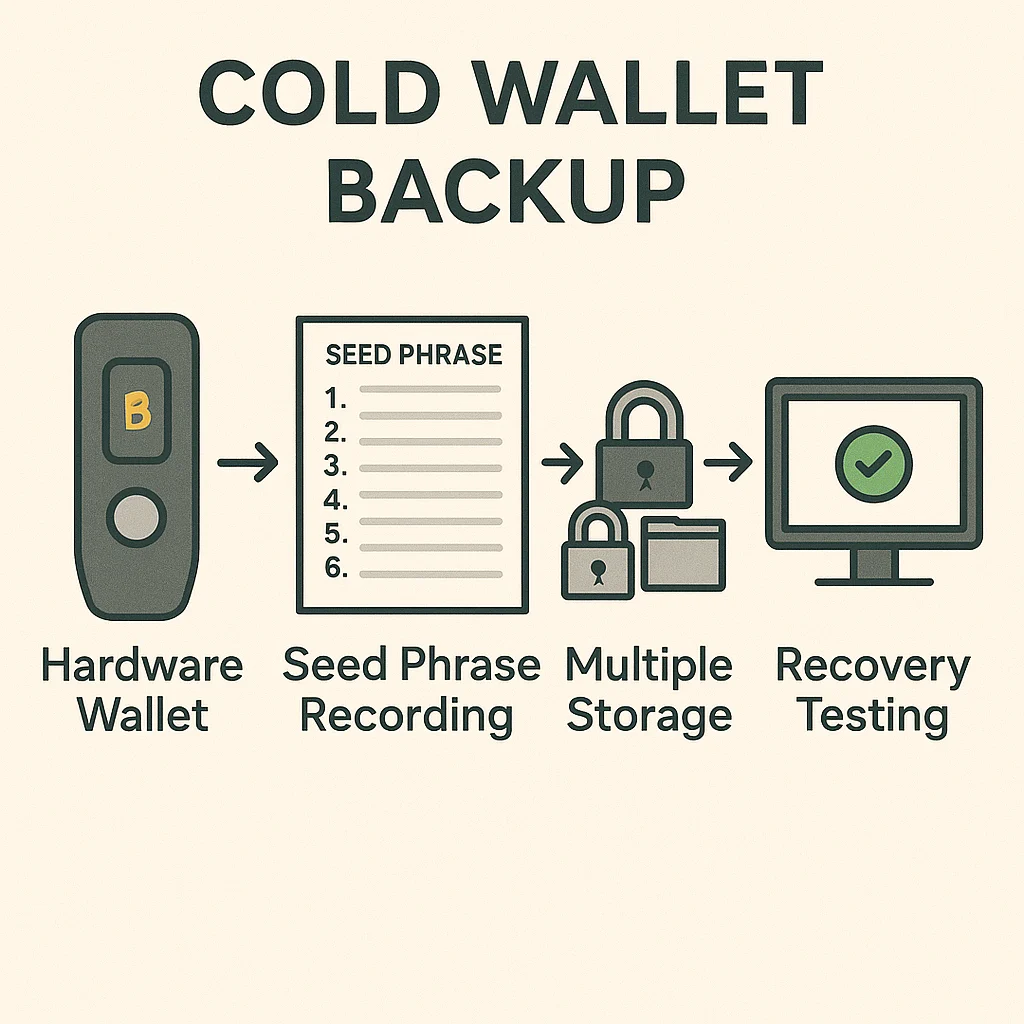
Infographic showing hardware wallet backup steps: device setup, seed phrase recording, multiple storage, and recovery testing

Real-World Examples

  • Metal seed storage using steel plates that resist fire, flood, and corrosion damage
  • Bank safety deposit boxes for storing written seed phrases in secure, controlled environments
  • Distributed storage splitting seed phrases across multiple secure locations

Why Beginners Should Care

Permanent loss prevention since cryptocurrency recovery is impossible without proper backup procedures, unlike traditional banking systems.

Inheritance planning enables family members to access cryptocurrency holdings in case of death or incapacitation through proper backup sharing.

Security balance between accessibility for legitimate recovery and protection from theft or unauthorized access to backup materials.

Related Terms: Hardware Wallet, Seed Phrase, Cold Storage, Recovery

Back to Crypto Glossary

Similar Posts

  • Price Discovery

    Price Discovery: Finding Fair Market ValuePrice discovery is the process by which markets determine the fair value of assets through buyer and seller interactions. It's like a continuous auction where everyone votes with their money.Price discovery refers to the mechanism by which markets establish asset prices through the interaction of supply and demand from buyers…

  • Dark Web

    Dark Web: Hidden Internet NetworksThe dark web consists of encrypted online networks accessible only through specialized software like Tor. It's where privacy advocates and criminals both hang out, but for very different reasons.The dark web refers to encrypted online content that exists on overlay networks requiring specific software, configurations, or authorization to access. Unlike the regular…

  • LayerZero

    LayerZero: Omnichain Interoperability Protocol LayerZero is an interoperability protocol that enables applications to send messages and transfer assets across different blockchains. It’s like having a universal translator for blockchain networks. LayerZero is a cross-chain communication protocol that enables decentralized applications to operate across multiple blockchains seamlessly. It provides infrastructure for omnichain applications that can access…

  • Private Key

    Private Key: Your Crypto’s Secret Password Your private key is the most important thing you’ll ever own in crypto. Lose it, and your money’s gone forever. No customer service number to call. A private key is a secret code that proves you own your cryptocurrency and allows you to spend it. It’s like the combination…

  • Private Mempool

    Private Mempool: Protected Transaction PoolsPrivate mempools keep pending transactions hidden from public view until they're included in blocks, preventing front-running and MEV extraction. It's like having a VIP lane that bots can't see.A private mempool is a non-public pool of pending transactions that are not visible to other network participants until they are included in…

  • Node

    Node: The Network’s Backbone Nodes are individual computers that maintain copies of the blockchain and enforce network rules. They’re the distributed infrastructure that makes cryptocurrency possible. A node is a computer that participates in a blockchain network by maintaining a copy of the distributed ledger and relaying transactions. Nodes validate transactions, store blockchain history, and…