
L2 Sequencer

L2 Sequencer: Transaction Ordering Engine

L2 sequencers determine transaction order on Layer 2 networks, controlling which transactions get included and how they’re arranged. They’re like traffic controllers for blockchain highways.

An L2 sequencer is a specialized node that collects, orders, and batches transactions for Layer 2 networks before submitting them to the main blockchain. Sequencers have significant power over transaction inclusion and ordering.

How L2 Sequencers Work

Transaction collection gathers user transactions from various sources and creates ordered sequences for batch processing.

MEV extraction opportunities arise from sequencers’ ability to reorder transactions, potentially front-running or sandwiching user trades.

Batch submission packages multiple transactions into single submissions to the main chain, amortizing costs across many users.
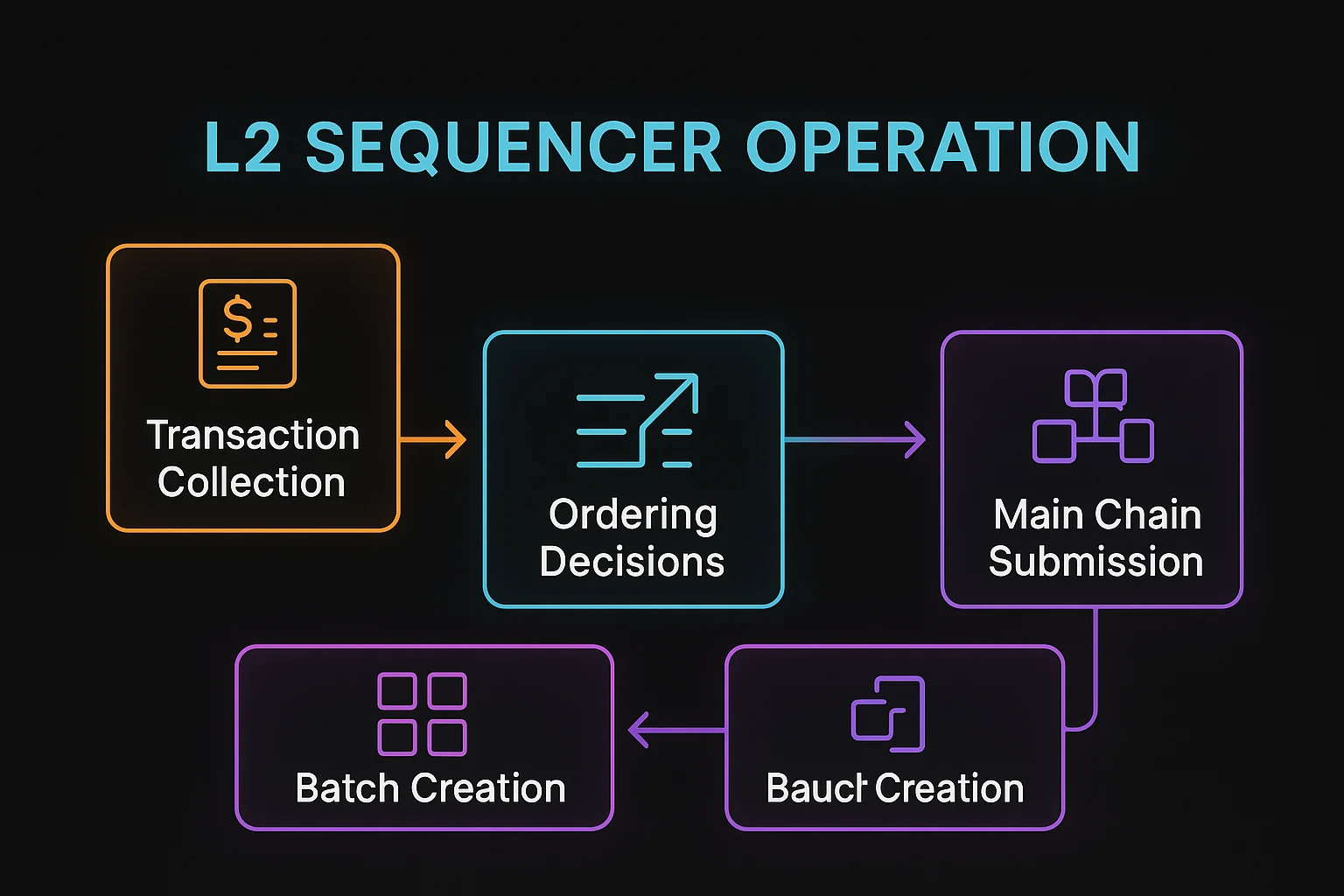
L2 sequencer operation showing transaction collection, ordering decisions, batch creation, and main chain submission

Real-World Examples

  • Arbitrum sequencer operated by Offchain Labs with plans for decentralization
  • Optimism runs centralized sequencing with revenue sharing for public goods funding
  • Base uses Coinbase-operated sequencing with similar centralization trade-offs

Why Beginners Should Care

Centralization risks as most L2s currently use single sequencers that could censor transactions or extract MEV unfairly.

Performance benefits from centralized sequencing that enables faster transaction confirmation and better user experience.

Decentralization roadmaps vary among L2 providers, with different timelines and approaches for reducing sequencer centralization.

Related Terms: Layer 2, MEV, Transaction Ordering, Centralization Risk

Back to Crypto Glossary

Similar Posts

  • Token Emissions

    Token Emissions: New Cryptocurrency CreationToken emissions refer to the creation and distribution of new cryptocurrency tokens over time according to predetermined schedules. It's like a factory that produces new money at controlled rates rather than printing it all at once.Token emissions describe the systematic creation and release of new cryptocurrency tokens into circulation according to…

  • Phishing Attack

    Phishing Attack: How Scammers Steal Your Crypto Phishing attacks are the #1 way people lose crypto. Scammers create fake websites that look identical to real ones, then steal your login credentials and private keys. A phishing attack is a fraudulent attempt to obtain sensitive information by impersonating a trustworthy entity through fake websites, emails, or…

  • Delegated Proof of Stake (DPoS)

    Delegated Proof of Stake (DPoS): Democratic Validation DPoS lets token holders vote for validators who secure the network on their behalf. It’s like electing representatives to Congress, but for blockchain consensus. Delegated Proof of Stake (DPoS) is a consensus mechanism where token holders vote for a limited number of delegates who validate transactions and secure…

  • Difficulty

    Difficulty: Mining Competition AdjustmentDifficulty refers to how hard it is to mine new blocks in proof-of-work cryptocurrencies, automatically adjusting to maintain consistent block times. It's like a video game that gets harder when you're doing too well and easier when you're struggling.Difficulty describes the measure of how computationally challenging it is to find valid proof-of-work…

  • Regulation

    Regulation: Government Rules for CryptoCryptocurrency regulation involves government rules and oversight for digital assets, exchanges, and blockchain businesses. It's the ongoing battle between innovation and compliance.Regulation refers to government laws, rules, and oversight mechanisms that govern cryptocurrency activities, including trading, taxation, anti-money laundering compliance, and consumer protection. Regulatory approaches vary significantly between jurisdictions.How Crypto Regulation WorksLicensing…

  • Cross-Chain Bridge

    Cross-Chain Bridge: Connecting Blockchain Islands Cross-chain bridges move assets between different blockchains, connecting isolated cryptocurrency ecosystems. They’re the highways between blockchain cities, but sometimes the bridges collapse. A cross-chain bridge is a protocol that enables the transfer of tokens, data, or smart contract calls between different blockchain networks. Bridges solve blockchain interoperability by creating connections…