
MetaMask

MetaMask: Your Gateway to Web3

MetaMask is the browser extension wallet that connects you to the decentralized web. It’s like having a crypto wallet built into your browser that talks to every DeFi protocol.

MetaMask is a browser extension and mobile wallet that enables interaction with Ethereum-based applications directly through web browsers. It manages private keys locally while providing easy access to DeFi protocols, NFT marketplaces, and Web3 applications.

How MetaMask Works

Browser integration injects Web3 functionality into websites, allowing dApps to request wallet connections and transaction signatures without handling private keys directly.

Local key storage keeps private keys encrypted on your device rather than on remote servers, giving you full control over your funds and signing capabilities.

Network switching enables access to multiple Ethereum-compatible chains like Polygon, Avalanche, and Binance Smart Chain through a single interface.
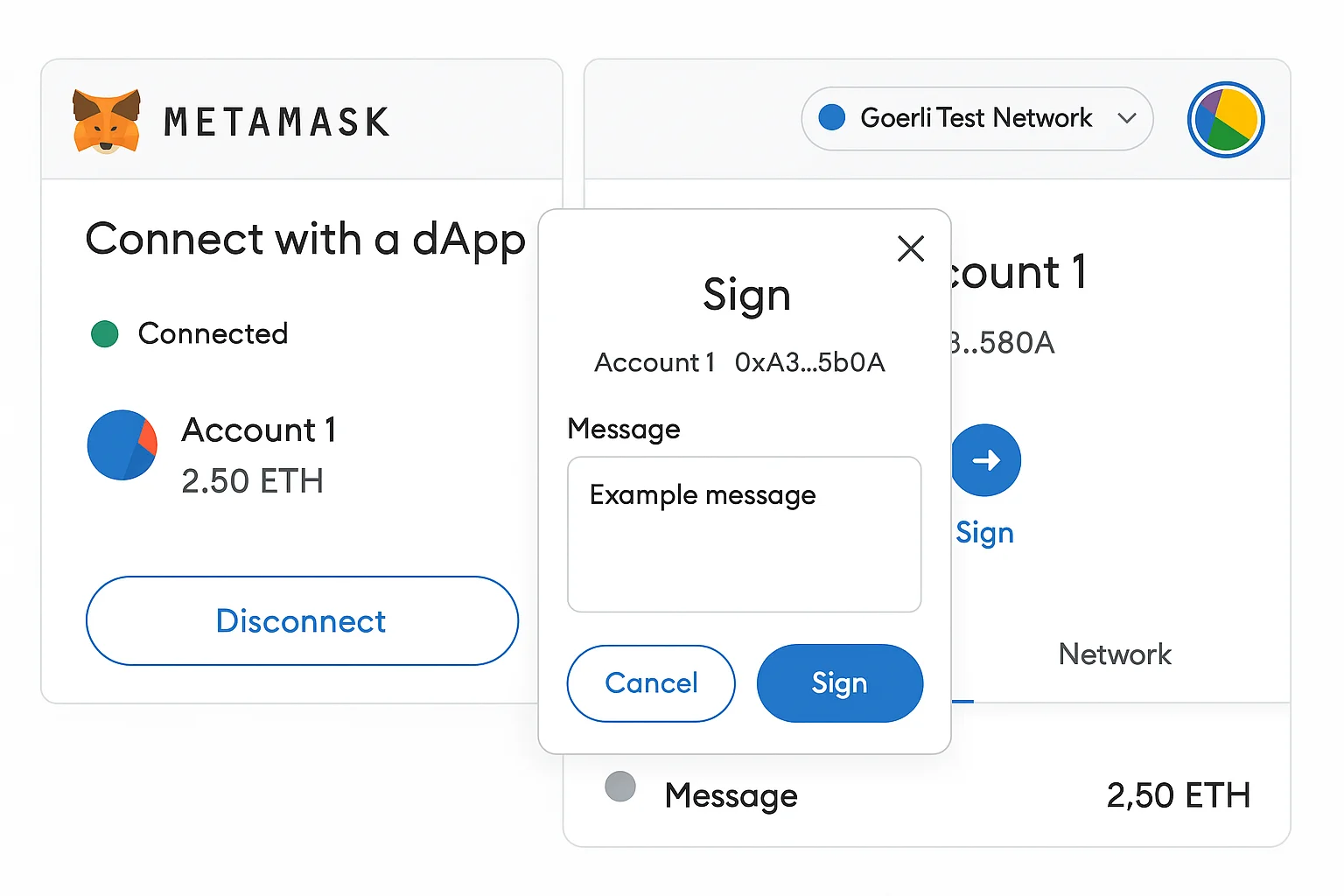
MetaMask interface showing wallet connected to a dApp, transaction signing prompt, and active network selection.

Real-World Examples

  • DeFi interactions on Uniswap, Compound, and Aave all use MetaMask for wallet connectivity
  • NFT purchases on OpenSea and other marketplaces integrate seamlessly with MetaMask
  • Web3 gaming platforms use MetaMask for in-game asset ownership and transactions

Why Beginners Should Care

Ease of use makes MetaMask the most beginner-friendly way to start exploring DeFi and Web3 applications without complex wallet setup procedures.

Security responsibility shifts to users since MetaMask stores private keys locally. Losing your seed phrase or getting phished means permanent loss of funds.

Phishing risks are high since malicious websites can create fake MetaMask prompts. Always verify URLs and transaction details before signing.

Related Terms: Hot Wallet, dApp, Web3, Seed Phrase

Back to Crypto Glossary

Similar Posts

  • Two-Factor Authentication (2FA)

    Two-Factor Authentication (2FA): Your Crypto’s Second Lock 2FA is the minimum security standard for any crypto account worth protecting. If you’re not using it, you’re basically leaving your front door unlocked. Two-factor authentication (2FA) requires two different verification methods to access your account – typically something you know (password) plus something you have (phone or…

  • Spam

    Spam: Unwanted Blockchain TransactionsSpam in cryptocurrency refers to unwanted or low-value transactions that clog networks and waste resources. It's like junk mail but for blockchain networks.Spam consists of unwanted transactions, messages, or data that consume network resources without providing legitimate value. These activities can degrade network performance and increase costs for legitimate users.How Crypto Spam WorksNetwork…

  • Public Key

    Public Key: Your Crypto Receiving Address Your public key is like your email address for crypto – you can share it freely without security concerns. A public key is cryptographically derived from your private key and generates your wallet addresses where others can send you cryptocurrency. It’s mathematically linked to your private key but reveals…

  • Liquid Restaking

    Liquid Restaking: Flexible High-Yield Staking Liquid restaking combines the capital efficiency of liquid staking with additional yield from securing multiple networks. It’s like having your cake and eating it too, but with slashing risks. Liquid restaking allows staked assets to secure additional protocols while remaining liquid through tokenized representations. Users can earn enhanced yields from…

  • Storage Refund

    Storage Refund: Incentivizing Data CleanupStorage refund mechanisms return gas fees to users who clean up blockchain storage by removing unnecessary data. It's like getting a deposit back when you return empty bottles.Storage refund refers to mechanisms that provide gas fee rebates or payments to users who free up blockchain storage space by deleting data or…

  • Protocol

    Protocol: Blockchain Network RulesA protocol is the set of rules and standards that govern how a blockchain network operates. It's like the constitution of a country that defines how the government works, what's allowed, and how decisions are made.A protocol refers to the comprehensive set of rules, standards, and procedures that define how a blockchain…