
Optimistic Rollup

Optimistic Rollup: Trust but Verify Scaling

Optimistic rollups assume transactions are valid by default but allow challenges during dispute periods. It’s like innocent until proven guilty for blockchain transactions.

An optimistic rollup is a Layer 2 scaling solution that assumes transactions are valid by default and only verifies them if someone submits a fraud proof during a challenge period. This enables fast, cheap transactions while maintaining security through economic incentives.

How Optimistic Rollups Work

Optimistic execution processes transactions immediately without validation, posting transaction data to the main chain for availability.

Challenge periods allow anyone to submit fraud proofs if they detect invalid transactions, with economic penalties for false challenges.

Fraud proofs enable verification of specific transactions without re-executing entire blocks, making dispute resolution efficient.
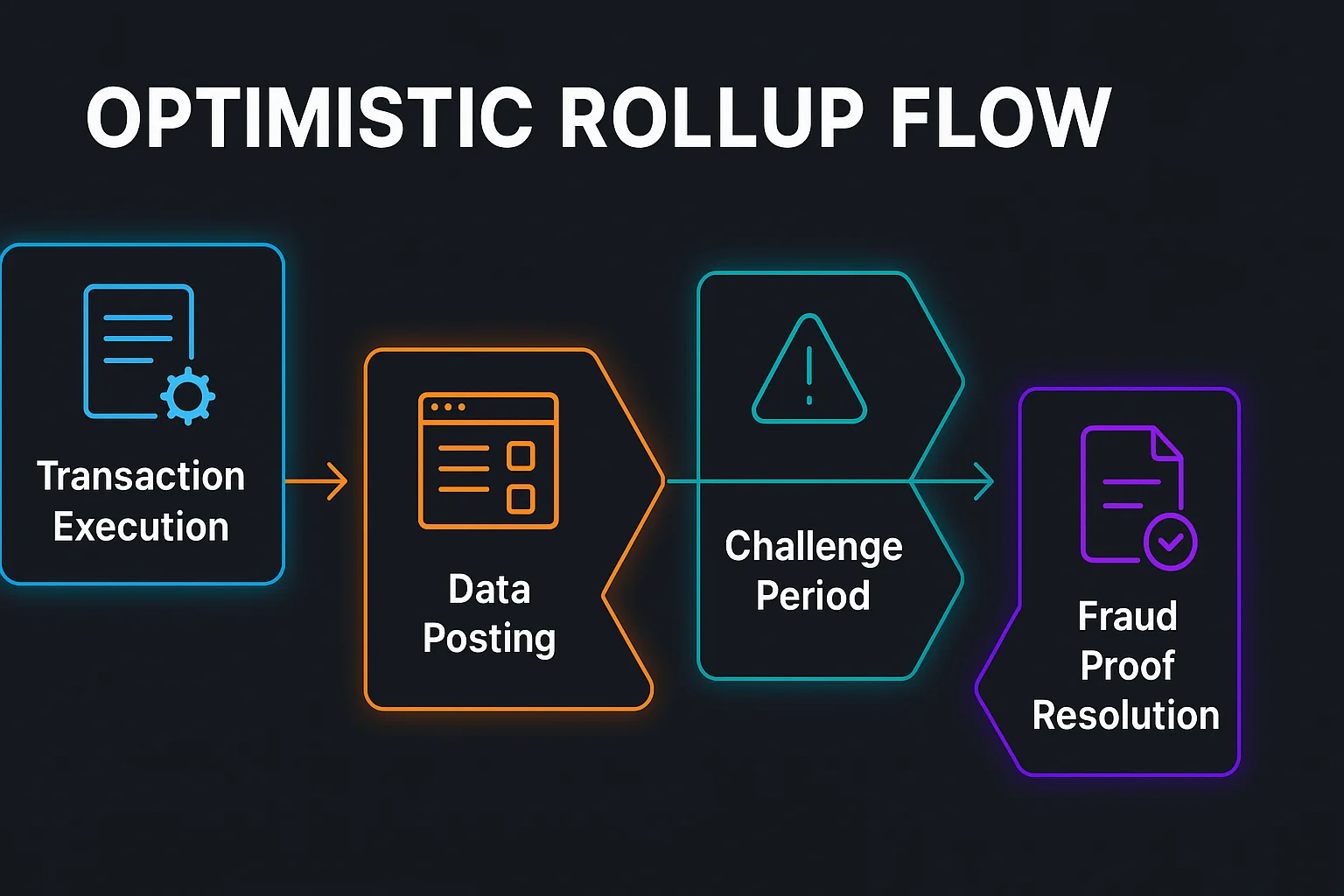
Optimistic rollup process showing transaction execution, data posting, challenge period, and fraud proof resolution

Real-World Examples

  • Arbitrum is the largest optimistic rollup with billions in TVL and major DeFi protocols
  • Optimism focuses on public goods funding and retroactive rewards for ecosystem development
  • Polygon Hermez (now zkEVM) started as an optimistic rollup before transitioning to ZK proofs

Why Beginners Should Care

Fast finality for most transactions since optimistic assumptions allow immediate execution without waiting for complex validation.

Withdrawal delays typically require 7-day challenge periods before funds can be moved back to Ethereum mainnet.

Lower costs compared to Ethereum mainnet while maintaining strong security guarantees through fraud proof mechanisms.

Related Terms: Layer 2, Fraud Proof, Challenge Period, Rollups

Back to Crypto Glossary

Similar Posts

  • Algorithmic Trading

    Algorithmic Trading: Automated Trading StrategiesAlgorithmic trading uses computer programs to execute trades based on predetermined rules and market conditions. It's like having a robot trader that never sleeps and follows your strategy perfectly.Algorithmic trading involves using computer algorithms to automatically execute cryptocurrency trades based on predefined strategies, market signals, and risk parameters. These systems can operate…

  • LayerZero

    LayerZero: Omnichain Interoperability Protocol LayerZero is an interoperability protocol that enables applications to send messages and transfer assets across different blockchains. It’s like having a universal translator for blockchain networks. LayerZero is a cross-chain communication protocol that enables decentralized applications to operate across multiple blockchains seamlessly. It provides infrastructure for omnichain applications that can access…

  • Blockchain Oracle Network

    Blockchain Oracle Network: Decentralized Data Feeds Blockchain oracle networks provide external data to smart contracts through decentralized systems rather than single data sources. It’s like having multiple weather stations instead of relying on one thermometer. A blockchain oracle network is a decentralized system of nodes that collectively provide external data to blockchain networks, reducing single…

  • Rollups

    Rollups: Scaling Through Bundling Rollups process hundreds of transactions off-chain then bundle the results into single on-chain transactions. It’s like carpooling for blockchain transactions – everyone shares the gas costs. Rollups are Layer 2 scaling solutions that execute transactions off the main blockchain but post transaction data on-chain for security. They inherit the security of…

  • Restaking Slashing

    Restaking Slashing: Enhanced Penalty Risks Restaking slashing involves penalties from multiple protocols simultaneously, amplifying potential losses for validators who secure additional networks. It’s like being liable for multiple insurance policies with a single accident. Restaking slashing refers to the enhanced penalty mechanisms that apply when validators use restaked assets to secure multiple protocols, potentially facing…

  • Regulation

    Regulation: Government Rules for CryptoCryptocurrency regulation involves government rules and oversight for digital assets, exchanges, and blockchain businesses. It's the ongoing battle between innovation and compliance.Regulation refers to government laws, rules, and oversight mechanisms that govern cryptocurrency activities, including trading, taxation, anti-money laundering compliance, and consumer protection. Regulatory approaches vary significantly between jurisdictions.How Crypto Regulation WorksLicensing…