
|

zkEVM

zkEVM: Zero-Knowledge Ethereum Virtual Machine

zkEVM provides Ethereum compatibility with zero-knowledge proof validation, enabling existing dApps to run on faster, cheaper networks while maintaining security. It’s like having Ethereum that’s been turbocharged with privacy and speed.

zkEVM is a zero-knowledge virtual machine that executes Ethereum transactions and smart contracts while generating cryptographic proofs of correct execution. This enables Ethereum compatibility with ZK rollup benefits of scalability and privacy.

How zkEVM Works

Ethereum compatibility ensures existing smart contracts, tools, and applications work without modification on zkEVM networks.

Zero-knowledge proofs validate transaction execution without revealing computation details, enabling both scalability and privacy.

Proof generation creates cryptographic evidence that transactions were executed correctly according to Ethereum rules, without exposing transaction content.
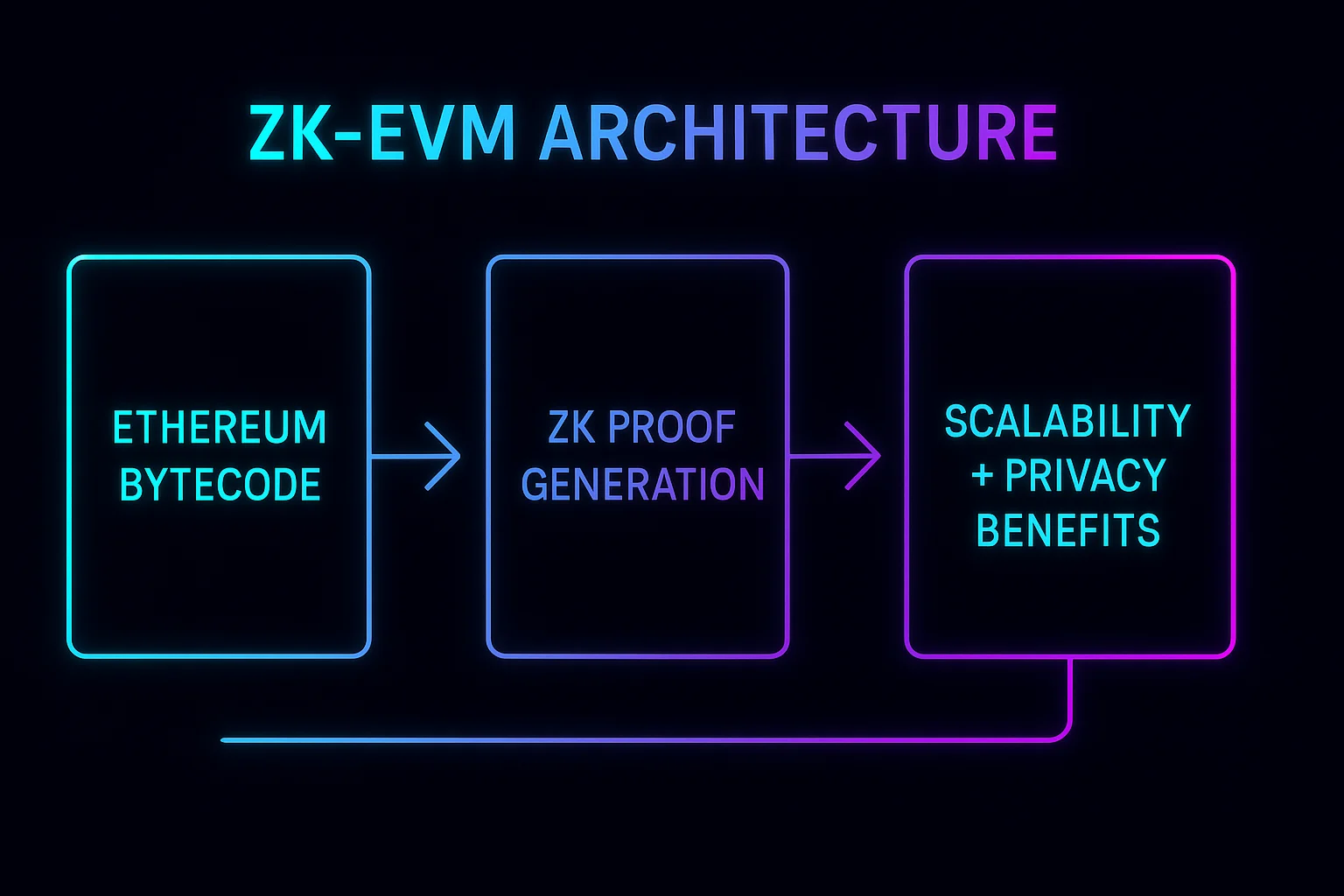
zkEVM architecture showing Ethereum bytecode, ZK proof generation, verification, and scalability plus privacy benefits

Real-World Examples

  • Polygon zkEVM maintains full Ethereum compatibility while using STARK proofs for validation
  • Scroll implements bytecode-level compatibility with optimized ZK proof systems
  • Linea provides enterprise-focused zkEVM with ConsenSys backing

Why Beginners Should Care

Seamless migration for Ethereum applications to benefit from improved speed and lower costs without code changes.

Enhanced privacy through zero-knowledge proofs that hide transaction details while maintaining verifiability.

Technical complexity in ZK proof generation creates different trade-offs compared to other scaling solutions in terms of finality and computational requirements.

Related Terms: Zero-Knowledge Proof, EVM, ZK-Rollup, Ethereum Compatibility

Back to Crypto Glossary

Similar Posts

  • Tornado Cash

    Tornado Cash: The Controversial Privacy Protocol Tornado Cash was Ethereum’s most popular mixing service until U.S. sanctions shut it down. It used zero-knowledge proofs to enable private transactions on a transparent blockchain. Tornado Cash was a decentralized mixing protocol on Ethereum that used zero-knowledge proofs to enable private transactions by breaking the link between sender…

  • Phishing Attack

    Phishing Attack: How Scammers Steal Your Crypto Phishing attacks are the #1 way people lose crypto. Scammers create fake websites that look identical to real ones, then steal your login credentials and private keys. A phishing attack is a fraudulent attempt to obtain sensitive information by impersonating a trustworthy entity through fake websites, emails, or…

  • Altcoin

    Altcoin: Every Cryptocurrency That Isn’t Bitcoin “Altcoin” literally means “alternative to Bitcoin.” Some are innovative improvements, others are marketing experiments, and many are outright scams. An altcoin is any cryptocurrency other than Bitcoin. The term covers everything from Ethereum’s smart contract platform to obscure meme coins with dog themes. How Altcoins Work Each altcoin attempts…

  • Bitcoin (BTC)

    Bitcoin (BTC): Digital Money That Banks Can’t Control Bitcoin isn’t just another investment – it’s the financial revolution that started it all. When traditional banks failed us in 2008, Bitcoin emerged as the answer. Bitcoin is digital money that operates without banks, governments, or middlemen controlling it. Think of it as cash for the internet…

  • Blockchain

    Blockchain: The Unchangeable Digital Ledger Forget the hype – blockchain is simply a better way to keep records. It’s like a ledger book that everyone can see, but no one can cheat. Blockchain is a chain of digital records (blocks) that are linked together and secured using cryptography. Once information goes into a block, changing…

  • Metaverse

    Metaverse: Digital Worlds Meet Real Money The metaverse promises persistent digital worlds where your avatar’s clothes cost more than your real ones. It’s part virtual reality, part speculation, part genuine innovation. The metaverse refers to interconnected virtual worlds where users can work, play, socialize, and own digital assets through avatars and blockchain-based economies. Think Ready…