
REKT

REKT: When Trades Go Wrong

REKT is what happens when your confident trade turns into a financial disaster. It’s crypto slang for getting completely wrecked by bad investment decisions.

REKT is slang for “wrecked” – suffering severe financial losses from cryptocurrency trading or investing. It describes the aftermath of leveraged positions gone wrong, rug pulls, exchange collapses, or any situation where someone loses most or all of their crypto.

How People Get REKT

Leverage trading amplifies both gains and losses. A 10x leveraged position can liquidate your entire account with just a 10% price move in the wrong direction.

FOMO buying at market tops followed by panic selling at bottoms creates the classic “buy high, sell low” pattern that destroys retail wealth systematically.

Scam projects including rug pulls, fake DeFi protocols, and worthless tokens promoted by influencers can completely wipe out investments overnight.
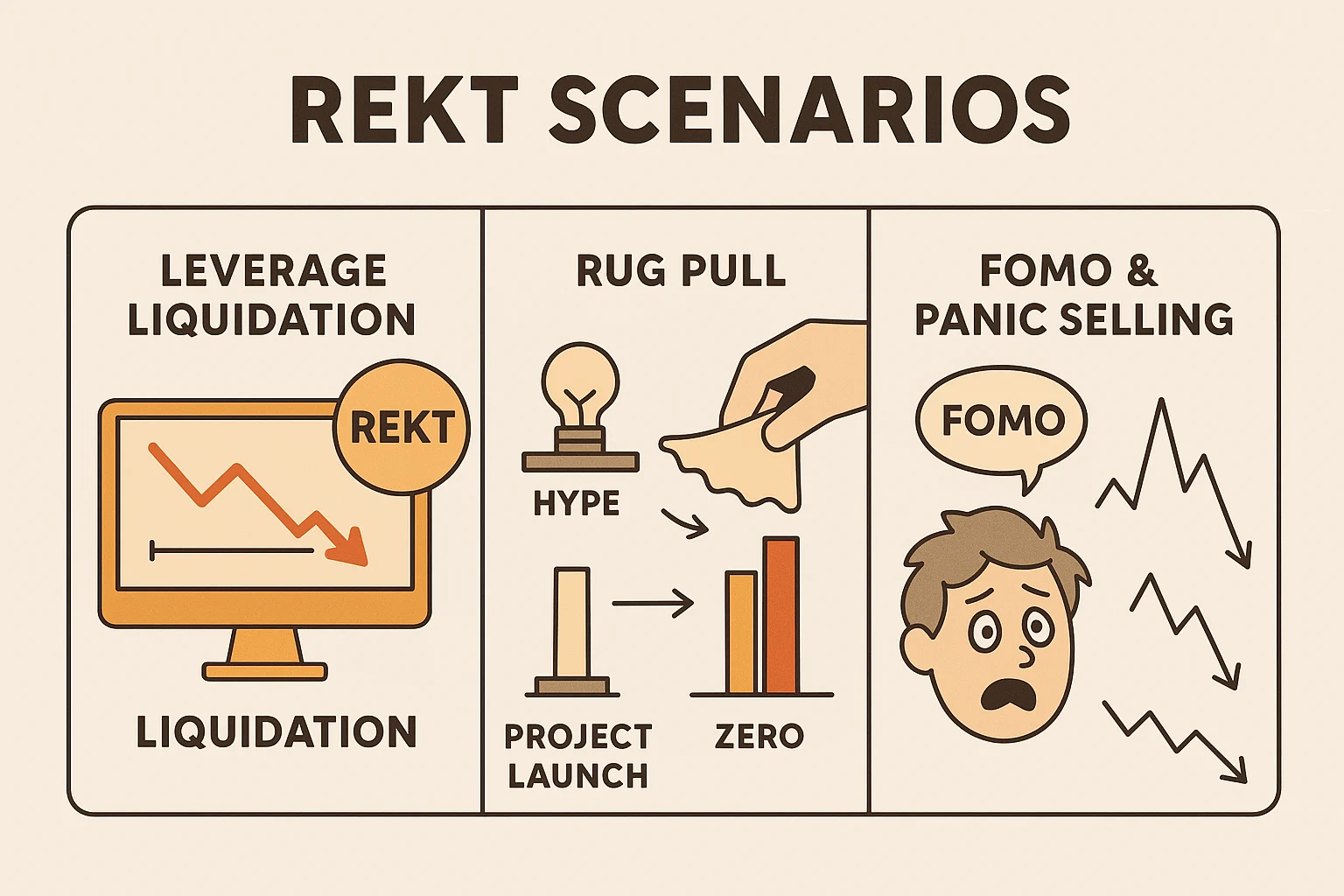
Infographic showing three REKT scenarios: leverage liquidation, rug pulls, and FOMO-induced panic selling with charts, icons, and emotional expressions

Real-World Examples

  • Terra Luna collapse – Investors lost 99.9% as LUNA went from $85 to essentially zero
  • FTX bankruptcy – Users with funds on exchange lost billions when platform collapsed
  • Leverage liquidations during flash crashes wipe out millions in minutes

Why Beginners Should Care

Getting REKT is educational but expensive. Learning from others’ mistakes costs less than experiencing them personally through poor risk management.

Position sizing prevents total REKT scenarios. Never invest more than you can afford to lose completely, especially in high-risk plays.

Emotional preparation for potential losses helps prevent panic decisions that turn temporary drawdowns into permanent REKT situations.

Related Terms: Liquidation, Leverage, Rug Pull, FOMO

Back to Crypto Glossary

Similar Posts

  • Fee Sharing

    Fee Sharing: Distributing Protocol RevenueFee sharing distributes a portion of protocol revenues to token holders, stakers, or other participants. It's like getting dividends from a company you own shares in.Fee sharing refers to mechanisms that distribute portions of protocol fees, transaction costs, or other revenues to token holders or network participants. This creates direct financial incentives…

  • Play-to-Earn (P2E)

    Play-to-Earn (P2E): Gaming Meets Income Play-to-earn games let players earn cryptocurrency and NFTs through gameplay. It’s turned gaming from entertainment expense into potential income source for millions worldwide. Play-to-earn (P2E) is a gaming model where players earn cryptocurrency tokens, NFTs, or other digital assets with real-world value through gameplay activities. Players own in-game assets that…

  • Oracle

    Oracle: Connecting Blockchains to Reality Oracles are the bridges between blockchain smart contracts and real-world data. Without them, DeFi would be a closed system talking only to itself. An oracle is a service that provides external data to blockchain networks, enabling smart contracts to access real-world information like prices, weather, sports scores, or any off-chain…

  • HTLC

    HTLC: Hash Time-Locked ContractsHTLCs are smart contracts that lock cryptocurrency until specific conditions are met within time limits. They're like escrow services with built-in deadlines that automatically return funds if deals fall through.Hash Time-Locked Contracts (HTLCs) are smart contracts that require both cryptographic proof and time-based conditions to be met before cryptocurrency can be accessed. These…

  • Token Launch

    Token Launch: Cryptocurrency Project DebutA token launch is the initial release of a new cryptocurrency token to the public market. It's like a product launch where a company introduces a new product, but for digital currencies instead of physical goods.Token launch refers to the process of introducing a new cryptocurrency token to the market, including…

  • Transaction Ordering

    Transaction Ordering: Sequence Control SystemsTransaction ordering determines the sequence in which transactions get processed within blockchain blocks. It's like controlling the line at a busy restaurant.Transaction ordering refers to the process by which blockchain networks determine the sequence of transactions within blocks. This ordering can significantly affect transaction outcomes, especially in DeFi applications sensitive to price…