
Proof of Work (PoW)

Proof of Work (PoW): Bitcoin’s Security Model

Proof of Work is how Bitcoin solves the double-spending problem without trusted authorities. It’s energy-intensive by design – that’s a feature, not a bug.

Proof of Work is a consensus mechanism where miners compete to solve computationally difficult puzzles to validate transactions and create new blocks. The winning miner earns newly created cryptocurrency plus transaction fees.

How Proof of Work Functions

Miners race to find a nonce (random number) that, when hashed with block data, produces a result starting with a specific number of zeros. This requires enormous computational power but is easy to verify.

Network difficulty adjusts automatically to maintain consistent block times regardless of total mining power. More miners join, difficulty increases. Miners leave, difficulty decreases.

Economic security comes from the cost of attacking the network. To control Bitcoin, you’d need 51% of global hash rate – requiring billions in mining equipment and ongoing electricity costs.
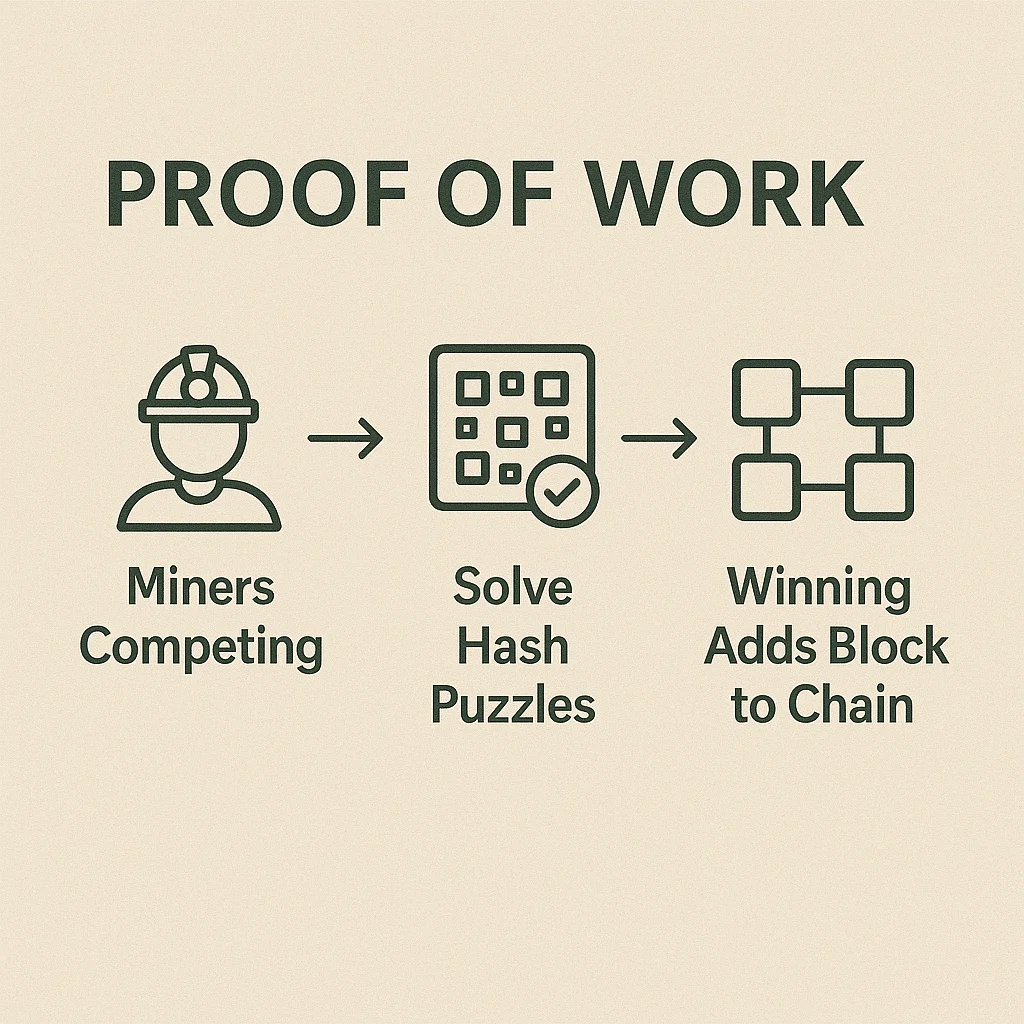
Infographic showing the Proof of Work process: miners competing, solving hash puzzles, and adding a block to the blockchain

Real-World Examples

  • Bitcoin uses SHA-256 hashing algorithm with ~10-minute block times
  • Litecoin uses Scrypt algorithm designed to be ASIC-resistant (though ASICs eventually emerged)
  • Monero regularly changes algorithms to maintain CPU/GPU mining accessibility

Why Beginners Should Care

Proof of Work provides proven security through economic incentives rather than trust in authorities. Bitcoin’s PoW has operated continuously for 15+ years without successful attacks.

Energy consumption is controversial but provides real security. The electricity cost makes attacks expensive while securing hundreds of billions in value.

Alternative consensus mechanisms like Proof of Stake are newer and less battle-tested, though they consume much less energy.

Related Terms: Mining, Hash Rate, Proof of Stake, 51% Attack

Back to Crypto Glossary

Similar Posts

  • Peer-to-Peer (P2P)

    Peer-to-Peer (P2P): Direct Network Communication Peer-to-peer networks enable direct communication between participants without central intermediaries. It’s like having a telephone system where everyone connects directly instead of going through switchboard operators. Peer-to-peer (P2P) refers to network architectures where participants communicate directly with each other rather than through centralized servers or intermediaries. This creates decentralized systems…

  • Stealth Address

    Stealth Address: Private Payment DestinationsStealth addresses create unique, one-time addresses for each transaction to enhance privacy by breaking the link between payments and recipient identities. They're like using a different PO box for every package delivery so no one can track all your mail to the same location.Stealth addresses are unique, one-time payment destinations generated…

  • Restaking Slashing

    Restaking Slashing: Enhanced Penalty Risks Restaking slashing involves penalties from multiple protocols simultaneously, amplifying potential losses for validators who secure additional networks. It’s like being liable for multiple insurance policies with a single accident. Restaking slashing refers to the enhanced penalty mechanisms that apply when validators use restaked assets to secure multiple protocols, potentially facing…

  • Single-Sided Staking

    Single-Sided Staking: Simplified Yield Farming Single-sided staking lets you earn yield on individual tokens without providing liquidity pairs or facing impermanent loss. It’s like earning interest on a savings account without loan risk. Single-sided staking allows users to stake individual tokens to earn rewards without needing to provide paired assets or manage liquidity pool positions….

  • Dusting Attack

    Dusting Attack: Tracking Through Tiny Transactions Dusting attacks send tiny amounts of cryptocurrency to addresses to track user behavior and deanonymize transactions. It’s like sprinkling digital breadcrumbs to follow where people go. A dusting attack sends small amounts of cryptocurrency (dust) to many addresses to track users’ transaction patterns and potentially identify wallet owners. Attackers…

  • NFT Lending

    NFT Lending: Borrowing Against Digital Art NFT lending allows using non-fungible tokens as collateral for cryptocurrency loans. It’s like pawning your rare baseball cards, except the cards live in digital wallets. NFT lending enables borrowers to use their non-fungible tokens as collateral to obtain cryptocurrency loans while retaining the potential upside of their digital assets….