
REKT

REKT: When Trades Go Wrong

REKT is what happens when your confident trade turns into a financial disaster. It’s crypto slang for getting completely wrecked by bad investment decisions.

REKT is slang for “wrecked” – suffering severe financial losses from cryptocurrency trading or investing. It describes the aftermath of leveraged positions gone wrong, rug pulls, exchange collapses, or any situation where someone loses most or all of their crypto.

How People Get REKT

Leverage trading amplifies both gains and losses. A 10x leveraged position can liquidate your entire account with just a 10% price move in the wrong direction.

FOMO buying at market tops followed by panic selling at bottoms creates the classic “buy high, sell low” pattern that destroys retail wealth systematically.

Scam projects including rug pulls, fake DeFi protocols, and worthless tokens promoted by influencers can completely wipe out investments overnight.
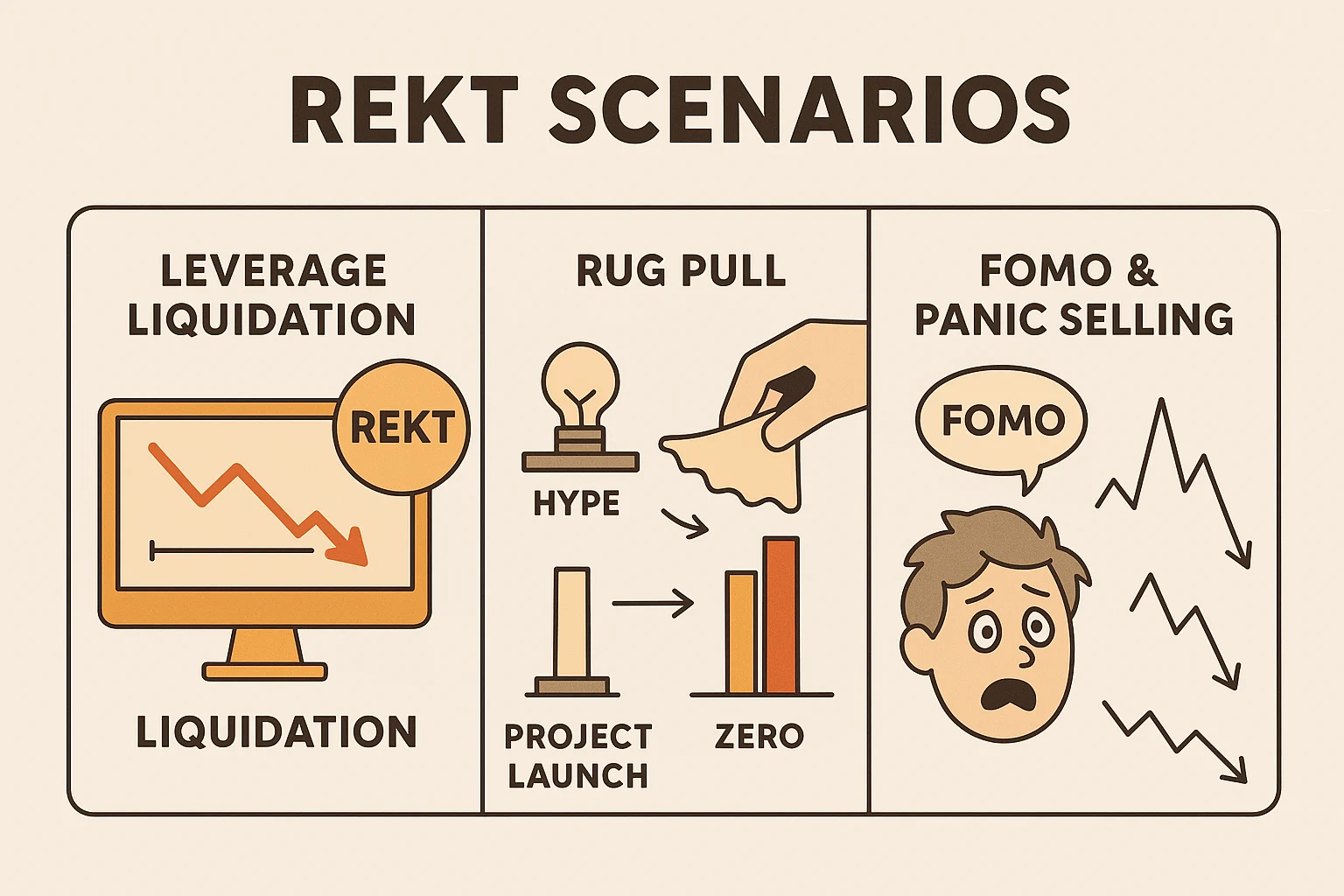
Infographic showing three REKT scenarios: leverage liquidation, rug pulls, and FOMO-induced panic selling with charts, icons, and emotional expressions

Real-World Examples

  • Terra Luna collapse – Investors lost 99.9% as LUNA went from $85 to essentially zero
  • FTX bankruptcy – Users with funds on exchange lost billions when platform collapsed
  • Leverage liquidations during flash crashes wipe out millions in minutes

Why Beginners Should Care

Getting REKT is educational but expensive. Learning from others’ mistakes costs less than experiencing them personally through poor risk management.

Position sizing prevents total REKT scenarios. Never invest more than you can afford to lose completely, especially in high-risk plays.

Emotional preparation for potential losses helps prevent panic decisions that turn temporary drawdowns into permanent REKT situations.

Related Terms: Liquidation, Leverage, Rug Pull, FOMO

Back to Crypto Glossary

Similar Posts

  • FOMO (Fear of Missing Out)

    FOMO: The Psychology That Drives Crypto Markets FOMO (Fear of Missing Out) is responsible for more bad crypto decisions than any technical analysis could prevent. It’s the emotional trap that turns rational people into panic buyers. FOMO is the anxiety that others are experiencing rewarding experiences from which one is absent. In crypto, it manifests…

  • Wallet Signature Spoofing

    Wallet Signature Spoofing: Fake Authorization Attacks Wallet signature spoofing tricks users into signing malicious transactions that appear legitimate but actually authorize harmful actions. It’s like signing a contract where the fine print changes after you sign. Wallet signature spoofing involves presenting misleading information about transaction contents to trick users into signing authorizations for unintended actions….

  • Sybil Attack

    Sybil Attack: Fake Identity Manipulation Sybil attacks involve creating multiple fake identities to gain disproportionate influence in networks that assume one person equals one vote. It’s like stuffing the ballot box with imaginary voters. A Sybil attack is when an individual or entity creates multiple fake identities to gain unfair influence over a network, voting…

  • Regulatory Compliance

    Regulatory Compliance: Following Government RulesRegulatory compliance involves adhering to government laws and regulations that apply to cryptocurrency activities. It's like following traffic laws, but for digital money.Regulatory compliance refers to conforming with applicable laws, regulations, and supervisory requirements for cryptocurrency businesses, transactions, and activities. Compliance requirements vary significantly between jurisdictions and continue evolving.How Crypto Compliance WorksKnow…

  • NFT Lending

    NFT Lending: Borrowing Against Digital Art NFT lending allows using non-fungible tokens as collateral for cryptocurrency loans. It’s like pawning your rare baseball cards, except the cards live in digital wallets. NFT lending enables borrowers to use their non-fungible tokens as collateral to obtain cryptocurrency loans while retaining the potential upside of their digital assets….

  • Phishing Attack

    Phishing Attack: How Scammers Steal Your Crypto Phishing attacks are the #1 way people lose crypto. Scammers create fake websites that look identical to real ones, then steal your login credentials and private keys. A phishing attack is a fraudulent attempt to obtain sensitive information by impersonating a trustworthy entity through fake websites, emails, or…